Truvani Vanilla Protein Powder: Quality Checklist
Disclosure: This post contains affiliate links. As an Amazon Associate I earn from qualifying purchases. If you buy through these links I may earn a small commission at no cost to you.
Last verified: November 13, 2026
Curious how your protein powder gets from a tiny seed to your kitchen shelf? I looked at Truvani Vanilla Plant-Based Protein through my seed-to-shelf checklist, which walks through each stage of how a product is grown, made, tested, and packaged. My sources are the product’s label, the brand’s own website, and public certification databases. Use this checklist as a guide to weigh what matters most to you. Labels can change, so check the current package before you buy.
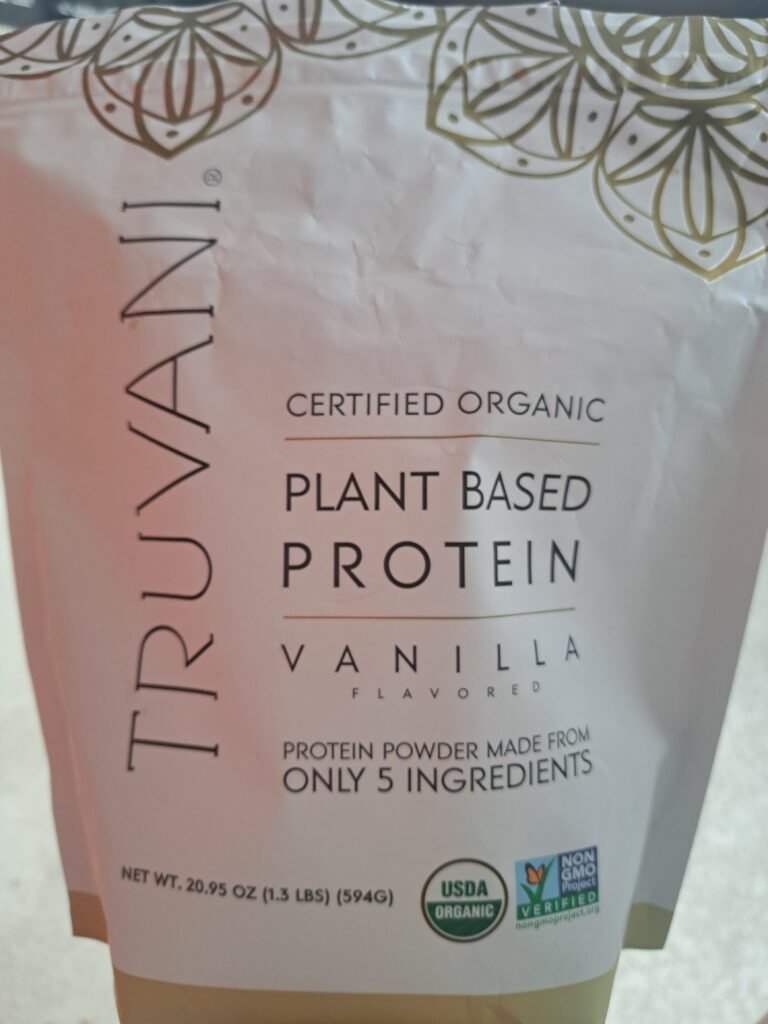
Product snapshot
Product: TruVani Organic Plant-Based Protein, Vanilla
Servings per container: About 20 (per the back label)
Serving size: 1 scoop (29g)
Protein per serving: 20g
Added sugars per serving: 0g
Ingredients listed on the pack: Organic Pea Protein, Organic Vanilla Powder, Organic Pumpkin Seed, Organic Monk Fruit Extract, Organic Chia Seed Protein
Q1.Were the plant-based ingredients grown from non-GMO (not genetically engineered) seeds, as verified by USDA Organic certification or Non-GMO Project Verification?
Yes, verified by two certifications. Truvani Vanilla Plant-Based Protein carries the Non-GMO Project Verified seal and is USDA Organic certified. USDA organic rules prohibit genetic engineering, which the regulation calls “excluded methods” (7 CFR §205.105). The Non-GMO Project verifies through ingredient testing and traceability.
Check it yourself: Look up the brand in the Non-GMO Project Product Finder and the certifier in the USDA Organic Integrity Database.
Shopping tip: “Non-GMO” on a label can be the brand’s own claim, with no outside check behind it. A seal from a group like the Non-GMO Project means a third party reviewed the product, and it’s reviewed again every year. If you see a non-GMO claim with no seal, look it up or ask the brand how they know.
Q2. Were the plant ingredients grown without prohibited synthetic fertilizers or sewage sludge?
Yes, supported by USDA Organic certification. Truvani Vanilla Plant-Based Protein carries the USDA Organic seal, and all five ingredients on its label are listed as organic. In organic crop production, synthetic substances are prohibited unless specifically allowed on the National List (§§205.601 to 205.602), and sewage sludge (biosolids) is prohibited (7 CFR §205.203(e)). Farms must also build soil fertility with crop rotations, cover crops, and plant and animal materials.
Check it yourself: Look for the USDA Organic seal, then search the manufacturer in the USDA Organic Integrity Database. Truvani’s listing shows certification by Where Food Comes From Organic.
Shopping tip: “Natural” and “non-GMO” don’t tell you whether synthetic fertilizers or sewage sludge were used. The USDA Organic seal is the easiest proof.
Q3. Were the plant ingredients grown without prohibited synthetic pesticides and herbicides?
Yes, supported by USDA Organic certification. Truvani Vanilla Plant-Based Protein has the USDA Organic seal, and all five ingredients on its label are listed as organic. Organic farmers have to try prevention first, like rotating crops and keeping fields clean, and can only use approved substances if that isn’t enough (7 CFR §205.206). The land also can’t have had prohibited substances on it for three years before harvest (7 CFR §205.202).
Check it yourself: Same steps as Q2. Look for the seal on the package, then search the manufacturer in the USDA Organic Integrity Database.
Shopping tip: Organic describes how a farm grows its crops, but crops can still pick up traces from outside the farm, like spray carried by the wind from a neighboring field (USDA Organic Land Management). Certifiers test samples from some farms each year (7 CFR §205.670), but not every batch of powder. If you’d like that extra proof, look for brands that share their lab results.
Q4. If the product contains animal-sourced ingredients, how were the animals raised and fed?
N/A. Truvani Vanilla Plant-Based Protein has five ingredients, and all of them are plant-based: Organic Pea Protein, Organic Vanilla Powder, Organic Pumpkin Seed, Organic Monk Fruit Extract, and Organic Chia Seed Protein. No animal-sourced ingredients are listed on the label.
Check it yourself: Read the full ingredient list and the “Contains” line, if there is one. For this product, you should see five plant ingredients and no milk or egg. The “Contains” line only covers major allergens, so the ingredient list is the complete picture. If you’re avoiding animal products, also look for a vegan claim and check whether it names a third-party certification or is just the brand’s own statement.
Shopping tip: Some plant-focused powders still include animal-derived ingredients that don’t need an allergen warning, such as honey, bee pollen, or vitamin D3, which is often made from sheep’s wool (lanolin). If you’re avoiding animal products, check the full ingredient list on the back, not just the front of the package.
Q5. Were the ingredients made without hexane, a chemical solvent used in some food processing?
Yes, supported by USDA Organic rules and the brand’s own statement. Some foods are made by using a liquid, called a solvent, to pull oil or protein out of a plant. Hexane is one of them. Truvani Vanilla Plant-Based Protein has the USDA Organic seal, and all five ingredients on its label are listed as organic. Organic rules don’t allow hexane. They also don’t allow any other synthetic solvent unless USDA has put it on an approved list (7 CFR §205.270(c)(2)). Truvani also says on its ingredient standards page that it never uses an ingredient processed with hexane. It also requires its suppliers to share any other substances they use while making their ingredients.
Check it yourself: Look for the USDA Organic seal. Then see whether the brand explains how it makes its ingredients. If you can’t find it, ask the brand, since what’s used during processing usually isn’t on the label.
Shopping tip: Chemicals or liquids used during processing, like solvents, often don’t have to be listed if only tiny amounts remain in the final product. Looking for the USDA Organic seal, or a brand that openly shares how its ingredients are processed, gives you a clearer picture.
Q6. Does the brand share how its ingredients are dried or heated?
Not found. Truvani doesn’t say how its ingredients are dried or heated on the pages I checked. Most protein powders go through some heat and drying. Pea protein, for example, is often spray-dried, which means a liquid is sprayed as a fine mist into hot air so it dries into a powder. Studies show heat can change the shape of a protein, but the effects depend on the temperature and the time, and the results on digestion are mixed, so there isn’t a simple answer.
Check it yourself: Look on the brand’s website and product page for words like “cold-pressed,” “low-temperature,” or “spray-dried.” If you can’t find them, ask the brand which drying and heating methods it uses.
Shopping tip: Look for specifics. A brand that names a method or a temperature gives you something you can compare. A phrase like “gently processed” doesn’t tell you much on its own. from claude
Q7. Is the product free of added sugar, artificial sweeteners, “natural flavors,” and gums?
Yes, supported by the ingredient list and Nutrition Facts panel. The product contains Organic Monk Fruit Extract, a plant-derived, non-sugar sweetener. So while the Nutrition Facts panel shows 0 g of added sugar, monk fruit is used to provide sweetness.
Check it yourself: Read the ingredient list on the back. Look for “natural flavors,” “artificial flavors,” gums, sugar alcohols such as erythritol, and any kind of sugar. Then check the “Added Sugars” line on the Nutrition Facts panel.
Shopping tip: “Natural flavors” refers to flavoring substances derived from natural sources, such as plants or animals. They can still undergo processing, including heat or enzymatic processes. Regulations allow flavoring ingredients to be declared collectively as “natural flavors” without naming each component individually (21 CFR §101.22). If you want more detail about a flavoring blend, you can contact the brand, although it may not disclose the full formulation.
Q8. Does the brand share how its factories handle cleanliness and sanitation?
Partially.Truvani states on its website that its products are made in U.S. facilities that follow FDA-required Current Good Manufacturing Practices (cGMPs) and perform equipment sanitation checks before production runs. However, the brand does not publicly disclose the names or locations of its third-party manufacturing plants or post independent facility food-safety audit certificates (such as SQF, BRCGS, or NSF).
Check It Yourself: Look near the bottom of the back panel on your Truvani Vanilla Protein Powder pouch for the stamped lot code, which ties your specific pouch back to its exact production run and pre-run sanitation log.
Shopping Tip: When comparing protein powders, check the brand’s product page or FAQ section to see if its manufacturing plant holds an independent third-party facility audit certification—such as SQF, BRCGS, or NSF—which verifies that outside inspectors have checked the factory’s sanitation, equipment cleaning, and hygiene practices.
Q9. Does the brand share how it handles allergens and cross-contact testing?
Yes. On the back of the pouch, the label prints: “This product is manufactured in a facility that processes other products which may contain milk, eggs, fish, shellfish, tree nuts, peanuts, wheat, sesame and soybean.” On its official allergen FAQ page, Truvani states that its facility swab-tests equipment before production runs, though it does not disclose whether dedicated allergen-free lines or shared equipment are used for those nine allergens.
Check It Yourself: Turn your Truvani Vanilla pouch over and read the fine-print facility notice directly beneath the ingredient list, alongside the major allergen labeling rules explained on the FDA food allergen guidance page.
Shopping Tip: Always look for allergen information printed on the package before you buy if it’s a concern. Even if a protein powder contains no allergens as ingredients, it may still be made in a factory that handles dairy, nuts, soy, or wheat.
Q10. Does the brand share heavy metals testing standards and results?
Partially. On its Test Results page, Truvani states that every lot is tested for heavy metals and posts lab data for its Chocolate flavor, but it does not publish lot-specific Certificates of Analysis (COAs) or numerical results for its Vanilla Protein Powder. Because cocoa powder absorbs different soil minerals than vanilla and pea protein, Truvani’s posted Chocolate numbers—as well as Consumer Reports’ January 2026 test of Truvani Chocolate (0.46 micrograms of lead per serving)—do not reflect the Vanilla flavor.
Check It Yourself: If you compare any brand’s published lab numbers per serving, check them against the FDA Interim Reference Level for lead (8.8 micrograms per day for females of childbearing age—the FDA’s strictest adult benchmark, which FDA researchers also use as a conservative reference for adult men—and 2.2 micrograms per day for children) or California Proposition 65 (0.5 micrograms per day for all adults).
Shopping Tip: When comparing plant-based protein powders, look for brands that post batch-specific Certificates of Analysis for the exact flavor you are buying, or carry third-party contaminant certifications such as Clean Label Project or NSF Certified for Sport.
Q11. Does the brand share testing for glyphosate and other contaminants?
Partially. Even when crops are grown under USDA Organic rules without synthetic weed killers, wind drift or shared storage can still leave trace residues—which is why brands test raw ingredients and finished batches separately. On its Test Results page Truvani states that every lot is third-party tested for glyphosate (the active ingredient in common weed killers) using Detox Project standards, though it does not publicly post lot-specific lab reports for glyphosate, broader multi-residue pesticide panels, mold toxins (mycotoxins), or microbiological testing for its Vanilla Protein Powder.
Check It Yourself: Look on a brand’s testing or FAQ page to see whether it posts actual third-party lab Certificates of Analysis (COAs) showing “non-detect” or numerical test results for finished batches, rather than only stating its general testing policy.
Shopping Tip: Because the USDA Organic seal verifies how a crop was farmed rather than guaranteeing zero accidental drift from nearby farms, look for brands that either post finished-batch residue lab reports or carry independent residue-free seals such as the Detox Project’s Glyphosate Residue Free certification
Q12. Does the brand disclose what the packaging is made of, including BPA, phthalate, and PFAS status?
Partially. On its official packaging FAQ page, Truvani states that its protein powder pouches are made from metalized polyester with a matte overlaminate on the outside. While BPA is primarily used in rigid plastics and can linings rather than standard flexible pouch films, Truvani does not state on its product page or packaging FAQ whether its inner food-contact layer is certified BPA-free, phthalate-free, or PFAS-free.
Check It Yourself: Inspect the pouch itself for any printed resin recycling symbol or “BPA-Free” badge, and review the brand’s FAQ section for food-contact material disclosures.
Shopping Tip: When buying protein powders packaged in flexible plastic pouches, look for brands that explicitly state whether the inner food-contact lining is BPA-free and phthalate-free.
Medical Disclaimer: This site is for informational purposes only. I’m not a doctor, dietitian, or medical professional, and the information of this site is not medical advice or a substitute for professional guidance. Please check with a qualified healthcare provider before changing your diet or supplements, especially if you have allergies, a medical condition, or are pregnant or nursing. Product details can change, so always read the current label.